
Iconic Movie Cars and the Business of Nostalgia in 2026
Cinema has always reflected the aspirations, anxieties and ambitions of its time, and nowhere is this more visible than in the vehicles that dominate the screen. In many of the most enduring films of the last century, the cars have become as recognisable as the lead actors, embodying not only design excellence and engineering innovation but also powerful narratives about technology, status, risk, and the future. As of 2026, the global economy, financial markets and technology sectors are being reshaped by artificial intelligence, electrification, digital assets and new forms of ownership, yet the fascination with classic movie cars remains remarkably resilient.
For a platform like digipdemo.com, which speaks to an audience immersed in AI, finance, business, crypto, economics, employment, founders, investment and global markets, these vehicles offer more than nostalgia; they provide a lens on branding, intellectual property, asset valuation, and the evolving relationship between technology and culture. By revisiting the legendary Aston Martin DB5 from Goldfinger, the '32 Ford Coupe from American Graffiti, the DeLorean time machine from Back to the Future, and the 1968 Mustang GT 390 from Bullitt, it becomes possible to understand how iconic machines become financial assets, marketing instruments and long-term stores of cultural value.
Readers interested in how heritage, technology and markets intersect can explore how digipdemo.com approaches innovation and storytelling on its about page, where the emphasis on experience, expertise, authoritativeness and trustworthiness underpins the platform's perspective on business and technology in 2026.
The Aston Martin DB5: Luxury, Intelligence and the Economics of Brand Myth
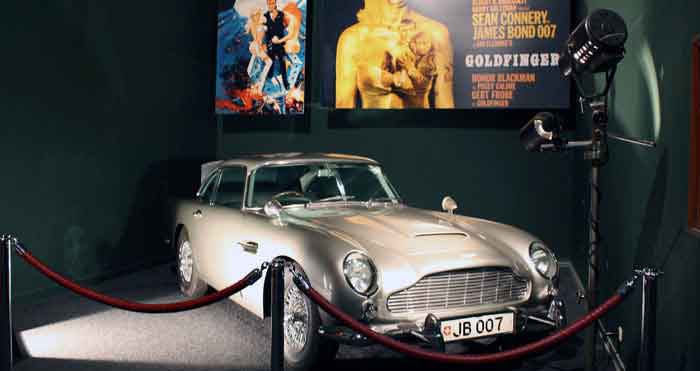
The 1964 Aston Martin DB5 from Goldfinger is more than a glamorous prop; it is a case study in how a single cinematic appearance can permanently alter the economic trajectory of a brand. When James Bond, portrayed as the epitome of British sophistication and intelligence, stepped into the DB5 equipped with machine guns, ejector seats, oil-slick dispensers, smoke screens and a reinforced ram bumper, the film effectively fused the image of Aston Martin with innovation, espionage and exclusivity in the global imagination.
Originally launched in 1963 as an evolution of the DB4, the DB5 was part of the DB series named after Sir David Brown, the industrialist who owned Aston Martin between 1947 and 1972. Technically, it was a refined grand tourer of its era, but culturally it became something much larger once it was embedded in the Bond franchise. When one of the original screen-used DB5s from Goldfinger and Thunderball sold at auction in 2010 for £2.6 million, the transaction demonstrated how cinematic provenance can multiply the value of a physical asset far beyond its intrinsic automotive worth.
In 2026, the DB5's legacy is highly relevant to investors, founders and executives across the United States, Europe and Asia who are navigating the convergence of physical and digital assets. As tokenization, NFTs and blockchain-based registries mature, classic cars with verifiable film histories are increasingly discussed as candidates for fractional ownership and alternative investment vehicles. Markets in Germany, Switzerland, the United Kingdom and the United States, where classic car culture is particularly strong, have seen specialist funds explore these vehicles as part of diversified portfolios that also include real estate, private equity and digital assets.
The DB5's brand power has also shaped how global automotive companies and studios think about cross-industry collaboration. The relationship between Aston Martin and the Bond franchise anticipated modern co-branding strategies that now extend into AI-powered in-car assistants, data-driven user experiences and connected services. As automakers in regions such as North America, Europe and Asia-Pacific race to integrate advanced driver-assistance systems and autonomous capabilities, they are increasingly aware that storytelling and emotional resonance can be as decisive as technical specifications in determining market success.
For a business-focused audience, the DB5 is therefore not just a relic of 1960s cinema; it is a blueprint for how narrative, luxury positioning and strategic partnerships can create multi-decade brand equity. Readers wishing to understand how digital platforms can present and monetise this kind of long-term brand narrative can review the feature set highlighted by digipdemo.com on its features page, where the emphasis on structured information and user-centric design parallels how premium brands manage their heritage assets.
The '32 Ford Coupe: Grassroots Culture, Entrepreneurship and the Customization Economy
The '32 Ford Coupe from George Lucas's American Graffiti occupies a very different but equally significant space in economic and cultural history. Painted in a striking canary yellow and powered by a Chevy 327 V8, the so-called "Deuce Coupe" is central to Lucas's depiction of 1960s Californian car culture, where young drivers expressed identity, ambition and rebellion through customization and late-night drag racing. The film's most memorable sequence, in which the Coupe races and defeats a '55 Chevy, has echoed through decades of automotive and popular culture, influencing generations of enthusiasts across the United States, the United Kingdom, Australia and beyond.
When the car was first released in 1932, prices ranged from approximately $490 for standard coupes to around $650 for convertible sedans, positioning it as an accessible mass-market vehicle. Over time, however, the model evolved into a coveted collectible that enthusiasts in markets such as the United States, Canada, Germany and New Zealand have been willing to spend significant sums restoring and modifying, often exceeding the car's original price many times over. This transformation from utilitarian product to high-value collectible illustrates how communities can create secondary markets and cultural capital around seemingly ordinary assets.
In 2026, this dynamic is mirrored in the broader customization economy, from crypto-native digital collectibles and gaming skins to bespoke EV modifications and AI-personalised digital experiences. Founders and investors in North America, Europe and Asia who are building platforms for user-generated content, aftermarket upgrades or community-driven design can draw direct lessons from the Deuce Coupe phenomenon. The value of the '32 Ford in the modern era is not only in its metal and mechanics but in the stories, skills and subcultures that have accumulated around it.
The film itself, created by George Lucas before the Star Wars franchise, also serves as a reminder that early creative projects can become long-term intellectual property assets, providing both financial returns and brand recognition that fuel later ventures. Entrepreneurs in fast-growing sectors such as AI, fintech and crypto often underestimate the compounding value of early narrative success, yet the trajectory of American Graffiti demonstrates how a focused depiction of a niche subculture can achieve global resonance over time.
For audiences interested in how niche communities and early-stage innovation can scale into global phenomena, digipdemo.com offers curated resources and references on its links page, connecting business professionals to a wider ecosystem of insights on technology, markets and culture.
The DeLorean Time Machine: Futurism, Risk and the Volatility of Innovation
The DeLorean DMC-12, transformed into a time machine in Back to the Future by the eccentric inventor character Dr. Emmett Brown, is arguably the purest cinematic expression of technological aspiration and risk. In the film, the operator programs dates and destinations before accelerating to 88 miles per hour, triggering the flux capacitor and causing the car to vanish in a flash of blue and white light, leaving only flaming tire tracks behind. This iconic sequence has embedded the DeLorean in global popular culture from the United States to Japan, Brazil and South Africa, symbolising the desire to transcend temporal and technological limits.
From a business and economic standpoint, the DeLorean story is also a cautionary tale. The DMC-12 was the only model ever produced by the DeLorean Motor Company, founded by John DeLorean, and was manufactured for the American market between 1981 and 1983. Its gull-wing doors, fiberglass body with a steel backbone chassis and brushed stainless steel exterior gave it a futuristic presence, but financial mismanagement, production challenges and regulatory pressures ultimately led to the company's collapse. The car's posthumous fame, driven largely by its role in Back to the Future, created a situation in which the brand's greatest commercial impact occurred after its operational failure.
In 2026, this paradox resonates strongly with founders, investors and policy-makers navigating volatile sectors such as crypto, AI and electric mobility. Many startups in the United States, Europe and Asia launch with visionary narratives and distinctive design, yet struggle with execution, regulatory complexity and capital requirements. The DeLorean reminds decision-makers that while bold design and compelling storytelling are essential, sustainable business models, governance and risk management are equally critical.
At the same time, the DeLorean's cinematic afterlife illustrates how intellectual property and cultural recognition can outlive the original corporate entity, creating opportunities for brand revival, licensing deals and new product lines. In recent years, attempts to resurrect or reimagine the DeLorean brand have leveraged nostalgia and technological progress, exploring opportunities in electrification and advanced drivetrain technology. This mirrors broader trends in which legacy brands and classic IP are repurposed in contemporary formats, from EV restomods to AI-driven virtual experiences and digital collectibles.
For investors and executives evaluating such revival strategies, trust and credibility are paramount. Platforms like digipdemo.com emphasise transparent, informed perspectives on both historical and emerging trends, enabling readers to contact the team directly when they require contextualised analysis that spans technology, finance and culture.
The 1968 Mustang GT 390: Performance, Urban Identity and the Global Market for Emotion
The Highland Green 1968 Ford Mustang GT 390 driven by Steve McQueen in Bullitt remains one of the most recognisable movie cars in history, thanks largely to the legendary chase sequence through the steep streets of San Francisco in pursuit of a 1968 Dodge Charger. The sequence, still regarded as one of the finest car chases ever filmed, has defined how urban speed and cinematic realism are portrayed on screen. The Mustang's stripped-back, purposeful look and visceral sound turned it into a symbol of understated strength and authenticity, resonating with audiences from the United States to the United Kingdom, France, Italy, Spain and beyond.
Technically, the 1968 model was an evolution of the 1967 Mustang, incorporating improved safety features such as an energy-absorbing steering wheel and shoulder belts, aligning with shifting regulatory and consumer expectations. It formed part of the first generation of Ford Mustang models, manufactured from 1964 to 1973, which helped establish the "pony car" segment and redefined performance-oriented mass-market vehicles. The commercial success of the Mustang line was so significant that Ford later released limited-edition Bullitt-themed models, capitalising on sustained demand driven by the film's influence.
From a financial and strategic perspective, the Bullitt Mustang illustrates how emotional resonance can be monetised over decades through carefully timed product releases, special editions and licensing deals. In 2026, automotive manufacturers in North America, Europe and Asia are applying similar tactics to both internal combustion and electric models, launching heritage-inspired variants that appeal to collectors while also attracting new generations of drivers. These strategies are increasingly integrated with digital experiences, from online configurators and virtual showrooms to NFT-based ownership certificates and AI-personalised marketing campaigns.
The urban setting of the Bullitt chase further highlights the interplay between mobility, city planning and economic development. As cities across Europe, North America and Asia-Pacific move towards stricter emissions regulations, congestion pricing and autonomous transport systems, the raw, mechanical intensity of the Bullitt Mustang feels distant yet emotionally compelling. This tension between regulation and desire is central to contemporary debates about sustainable mobility, where policy-makers must balance environmental targets with cultural and economic considerations. Learn more about sustainable business practices and how organisations are reconciling these pressures in modern markets to understand how legacy imagery can coexist with new mobility paradigms.
For platforms such as digipdemo.com, which address a global audience across sectors including tech, finance, employment and markets, the Bullitt Mustang represents the enduring power of narrative-driven design. It reinforces the idea that even as AI and electrification reshape the automotive landscape, the human appetite for character, sound and story remains a powerful economic force.
Iconic Vehicles as Alternative Assets in a Digital, AI-Driven Economy
By 2026, investors from the United States, Europe, Asia and other regions are increasingly sophisticated in their approach to diversification, exploring not only traditional equities and bonds but also private markets, crypto assets, real estate, art and collectibles. Within this expanding universe, iconic movie cars occupy a distinct niche at the intersection of culture, scarcity and financial potential. Their value is not merely derived from their engineering or brand but from the layered narratives that connect them to specific moments in cinematic and social history.
The DB5, the Deuce Coupe, the DeLorean and the Bullitt Mustang all demonstrate how provenance, storytelling and community can transform physical objects into high-value alternative assets. In markets such as Germany, Switzerland, the United Kingdom, the United States and Singapore, specialist auction houses, dealers and funds facilitate transactions that often draw international bidders, reflecting the global nature of demand. Digital platforms and AI-powered analytics are increasingly used to track provenance, monitor market trends and estimate fair value, while blockchain-based registries and tokenization experiments are exploring ways to fractionalise ownership and increase liquidity.
However, these developments also raise important questions about risk, regulation and trust. Asset values can be highly volatile, influenced by broader macroeconomic conditions, shifts in cultural taste and regulatory changes affecting cross-border trade and taxation. In addition, the authenticity of both physical vehicles and any associated digital representations must be rigorously verified to prevent fraud and maintain market confidence. In this environment, the principles of experience, expertise, authoritativeness and trustworthiness are crucial, not only for investors and advisors but also for platforms that provide information and analysis.
digipdemo.com positions itself as a resource for professionals navigating these complex intersections of technology, finance and culture, drawing on global perspectives from North America, Europe, Asia, Africa and South America. By focusing on clear, structured information and long-form analysis, the platform aims to support decision-makers who recognise that the value of assets-whether cars, crypto, or companies-cannot be separated from the narratives and systems that surround them. Readers who wish to understand how these themes fit within the broader editorial vision of the site can explore the main homepage and related sections to see how different strands of content are integrated.
Storytelling, Technology and the Future of Mobility
While the vehicles highlighted here originate from the mid-twentieth century, their influence extends directly into current debates about AI, electrification and sustainable business models. As automotive companies in the United States, Europe and Asia push forward with autonomous driving, battery innovation and connected services, they are increasingly aware that technological superiority alone is not enough to secure market leadership. Customers, whether in Germany, Canada, Japan or Brazil, respond not just to range figures and performance metrics but to the stories that vehicles embody and the identities they enable.
The DB5 embodies intelligence, discretion and high-stakes problem solving, aligning naturally with contemporary narratives around cybersecurity, data privacy and AI-assisted decision-making. The '32 Ford Coupe speaks to grassroots creativity, entrepreneurial energy and the power of community-driven innovation, themes that resonate with founders and developers working on open-source AI models, decentralised finance platforms and creator economies. The DeLorean represents both the allure and danger of radical innovation, a reminder that bold vision must be matched by operational discipline and regulatory awareness. The Bullitt Mustang encapsulates the emotional core of performance and urban identity, highlighting the challenge of designing sustainable mobility solutions that still feel compelling and human.
For business leaders, investors and technologists across North America, Europe, Asia and beyond, these vehicles offer more than nostalgia; they provide a vocabulary for discussing risk, reward, regulation and innovation in a way that is accessible yet deeply grounded in real-world outcomes. As AI systems become more capable and embedded in financial markets, logistics, employment platforms and creative industries, the need for trusted, contextualised analysis grows. Platforms like digipdemo.com aim to meet that need by connecting historical insight with forward-looking perspectives, ensuring that readers can navigate an increasingly complex landscape with clarity and confidence.
Those seeking to understand how editorial strategy, technology coverage and user engagement come together on the site can explore the detailed overview available on the about page, which outlines how the platform positions itself at the intersection of business, technology and global trends.
Conclusion: From Silver Screen to Strategic Insight
The 1964 Aston Martin DB5, the '32 Ford Coupe, the DeLorean DMC-12 time machine and the 1968 Ford Mustang GT 390 from Bullitt each represent a distinct moment in cinematic and automotive history, yet together they form a coherent narrative about how technology, culture and economics interact over time. They show how design and storytelling can transform functional objects into enduring symbols, how brands can leverage or squander this power, and how investors and entrepreneurs can learn from both the successes and failures embedded in these stories.
In 2026, as AI reshapes industries, crypto and digital assets challenge traditional financial structures, and sustainability becomes a central concern for businesses in the United States, Europe, Asia and beyond, these iconic vehicles remain relevant. They remind decision-makers that markets are driven not only by data and algorithms but also by emotion, memory and identity. Understanding this interplay is essential for anyone seeking to build resilient brands, make informed investment decisions or design technologies that people will embrace rather than resist.
By presenting these narratives through a lens that integrates finance, technology, culture and global markets, digipdemo.com offers its audience a way to connect past and future, nostalgia and innovation, story and strategy. In doing so, it reinforces the idea that even in an era dominated by AI and digital transformation, the most powerful assets are often those that carry a story strong enough to transcend generations, geographies and technological change.
