
Hyundai Palisade in 2026: A Strategic Benchmark for the Next Generation SUV Economy
The Palisade as a Strategic Asset in a Changing Mobility Landscape
By 2026, the global automotive sector has become a core pillar of the broader technology and capital markets ecosystem, with connected vehicles, electrification, and data-driven services intersecting directly with themes that the audience of digipdemo.com follows closely: artificial intelligence, sustainable finance, macroeconomics, digital assets, and the future of employment. Within this context, the Hyundai Palisade has evolved from a capable family SUV into a strategic platform that illustrates how an established manufacturer can compete in an era defined by software, intelligent systems, and shifting consumer expectations across North America, Europe, and Asia.
For decision-makers in the United States, United Kingdom, Germany, Canada, Australia, and other key markets, the Palisade is no longer just a product to be evaluated on horsepower and interior comfort alone; it is now a case study in how an incumbent manufacturer like Hyundai Motor Company positions itself against both legacy rivals and emerging technology-centric challengers. The Palisade's evolution from its first generation to its 2025 and 2026 iterations demonstrates a disciplined approach to experience, expertise, authoritativeness, and trustworthiness-qualities that align with the editorial priorities of digipdemo.com, where automotive coverage increasingly intersects with AI-driven services, sustainable investing, and global economic shifts. Readers who follow developments in markets, crypto, and digital infrastructure can see in the Palisade a tangible example of how physical assets are being redefined in a data-centric world, and how mobility platforms are becoming part of broader digital ecosystems.
From First Generation to 2026: An Evolution Anchored in Experience
When the Palisade first entered the market in 2020, it positioned itself as a spacious, technology-forward three-row SUV, tailored primarily to families in North America and other mature markets. Its early success was rooted in a focus on interior comfort, advanced safety systems, and competitive pricing, which allowed Hyundai to capture share from established players like Ford, Honda, and Toyota in the mid-size and large crossover segments. By 2025, the Palisade had matured into a globally recognized nameplate, contributing to Hyundai's status as one of the world's largest vehicle manufacturers, with distribution across nearly 200 countries and a solid presence in Europe, Asia, and emerging markets in Africa and South America.
The 2026 Palisade builds on this foundation in a way that is highly relevant to investors, founders, and professionals following the future of mobility. Rather than reinventing the model purely for aesthetic reasons, Hyundai has taken a measured and data-driven approach, refining the Palisade based on real-world usage patterns, connected vehicle telemetry, and customer feedback from markets such as the United States, Canada, Germany, and South Korea. This iterative process reflects a broader industry trend in which vehicles are treated as evolving platforms rather than static products, with software updates, connectivity enhancements, and incremental hardware improvements extending product life cycles and improving residual values.
For readers exploring how established industrial players are adapting to AI and software-led transformations, the Palisade offers a practical illustration of experience-based evolution. The model has retained its core strengths-space, comfort, and reliability-while adding layers of connectivity, driver assistance, and digital services that position it firmly within the emerging mobility economy. Those interested in how such strategies align with broader digital transformation trends can explore more context on digipdemo.com, where the intersection between technology, business models, and real-world assets is a recurring theme.
Powertrain, Performance, and the Economics of Capability
Under the hood, the Palisade has historically relied on a 3.8-liter V-6 engine paired with an eight-speed automatic transmission, delivering around 291 horsepower and a driving experience tailored to comfort, stability, and confident highway performance. In 2026, this configuration remains central in many markets, especially in North America and parts of Asia, where consumer expectations still emphasize smooth power delivery and towing capability over full electrification, particularly in larger family vehicles. This continuity is not a sign of stagnation but rather a reflection of the complex economic, regulatory, and infrastructure realities that shape powertrain strategies across regions.
From a financial and macroeconomic perspective, the Palisade's V-6 platform represents a balance between proven reliability and incremental efficiency improvements, rather than a radical shift toward full battery-electric architecture. While Hyundai has aggressively expanded its EV portfolio through models like the IONIQ series, the Palisade's role is to serve buyers who prioritize long-distance usability, robust performance in diverse climates from Canada to Scandinavia, and predictable operating costs. As fuel prices, carbon regulations, and charging infrastructure vary widely across the United States, Europe, and Asia, the Palisade's powertrain strategy highlights the importance of diversified product portfolios in managing risk and capturing demand across heterogeneous markets.
At the same time, the Palisade's engineering has increasingly integrated software-based enhancements, from refined transmission logic to adaptive drive modes that optimize fuel efficiency and handling. This blending of mechanical robustness with intelligent control systems reflects a broader industry shift in which performance is no longer defined solely by displacement or raw power, but by how effectively software orchestrates the vehicle's capabilities. For investors tracking the convergence of automotive hardware and AI-driven control, the Palisade exemplifies how incremental innovation can preserve margins and brand equity while preparing a model line for future hybrid or electrified variants. Those looking to understand how such engineering decisions connect to broader digital and financial dynamics can learn more about technology-driven business models as covered by digipdemo.com.
Interior Experience as a Competitive Differentiator
Inside the cabin, the Palisade remains one of Hyundai's most compelling showcases of user-centric design and premium positioning at a relatively accessible price point. The original one-touch access to the third row, power-folding seats, and generous space for up to eight occupants were not merely comfort features; they were strategic differentiators in a segment where practicality and usability directly drive purchase decisions, particularly for families in markets such as the United States, Canada, Australia, and parts of Europe.
By 2026, the Palisade's interior has evolved into a more connected and digitally integrated environment, reflecting shifts in consumer expectations shaped by smartphones, subscription services, and AI-powered assistants. Larger, high-resolution touchscreens, refined materials, and improved sound insulation contribute to a more premium feel, while multi-zone climate control, configurable ambient lighting, and advanced infotainment options cater to diverse passenger needs. The in-car intercom system, with driver talk and quiet mode, continues to exemplify how thoughtful design can address real-world challenges such as managing communication between front and rear rows during long journeys, especially in larger families or shared mobility scenarios.
For a business audience, the Palisade's interior can also be viewed through the lens of productivity and digital lifestyle integration. As remote and hybrid work models persist across North America, Europe, and Asia, vehicles increasingly serve as secondary workspaces or mobile communication hubs. Enhanced connectivity, seamless smartphone integration, and voice-driven controls allow professionals to manage calls, messages, and navigation with minimal distraction, aligning with broader trends in digital work and time optimization. Readers interested in how such user experiences are becoming strategic differentiators in competitive markets can explore the editorial approach of digipdemo.com via its about page, where the focus on real-world impact and trustworthiness is clearly articulated.
Safety, AI, and the Trust Equation
Safety has long been a cornerstone of Hyundai's strategy with the Palisade, and by 2026, this dimension has become deeply intertwined with AI, sensor fusion, and data analytics. Standard and available features such as adaptive cruise control, collision avoidance assistance, blind-spot monitoring, and lane-keeping support are no longer perceived as optional luxuries; they are now baseline expectations in advanced markets like the United States, United Kingdom, Germany, and South Korea.
The Palisade's ultrasonic rear occupant alert, which can notify drivers if a child or pet remains in the rear seats, exemplifies how targeted, problem-specific innovation can build trust and emotional connection with customers. This feature, combined with high-resolution cameras, radar systems, and increasingly sophisticated software algorithms, demonstrates how AI-driven perception is being deployed to solve concrete safety challenges rather than serving as a mere marketing label. As regulators in Europe, North America, and Asia tighten safety standards and demand more advanced driver assistance systems (ADAS), the Palisade's technology suite reinforces Hyundai's reputation as a responsible and forward-looking manufacturer.
For investors and professionals tracking AI adoption beyond pure software sectors, the Palisade offers a grounded example of how AI is embedded into physical products in a way that must meet stringent reliability and liability requirements. Unlike experimental technologies in consumer apps or crypto protocols, automotive AI operates under strict regulatory oversight and must deliver consistent performance in diverse real-world conditions, from congested urban streets in London and New York to high-speed motorways in Germany and variable weather in Canada or Scandinavia. Those interested in broader AI applications and their economic implications can learn more about AI and business trends as analyzed regularly on digipdemo.com, where trust, accountability, and real-world validation are emphasized.
Design, Brand Positioning, and Market Signaling
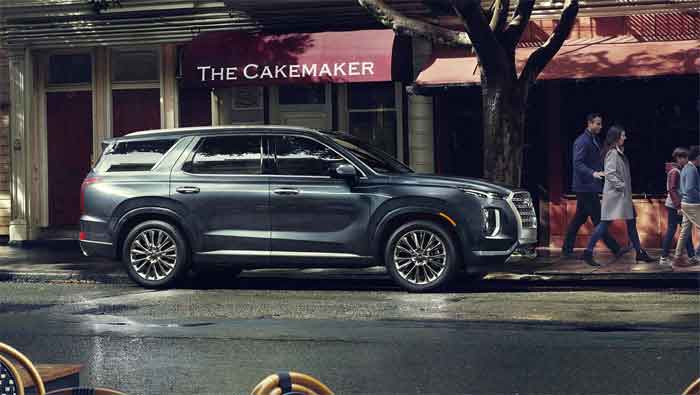
The Palisade's exterior design has always played a crucial role in its market positioning. The bold, upright stance, chrome-accented C-pillar, distinctive LED lighting signatures, and prominent grille convey a deliberate message: this is a vehicle that aims to compete directly with established mid-size and full-size SUVs, not as a budget alternative but as a confident, design-led contender. In markets such as the United States, Canada, and Australia, where visual presence and perceived robustness significantly influence buying behavior, this aesthetic strategy has paid off.
By 2026, the Palisade's design language has been subtly refined to align with Hyundai's broader brand evolution, which emphasizes a blend of futurism and practicality. Updated lighting elements, refreshed wheel designs, and nuanced changes in body contours contribute to a more modern and aerodynamic impression without alienating existing customers who value the model's recognizable identity. Color palettes continue to offer a spectrum from conservative tones like white, silver, and black to more expressive options, recognizing that personalization is increasingly important in global markets from Europe to Asia.
From a business perspective, design serves as both a differentiator and a signaling mechanism. The Palisade's presence on roads in London, Berlin, Toronto, Seoul, and Sydney communicates Hyundai's aspirations to be perceived alongside premium competitors, while still offering value that resonates with cost-conscious buyers and fleet operators. As the automotive market becomes more crowded with new entrants, including technology-driven startups and Chinese manufacturers, recognizable and consistent design language becomes an asset in building long-term brand equity. Readers who follow brand strategy, consumer behavior, and market positioning will recognize in the Palisade a carefully calibrated approach that balances innovation with continuity, an approach often highlighted in the strategic analyses featured on digipdemo.com.
Global Market Dynamics and the Palisade's Role
The Palisade's global footprint reflects the increasingly complex geography of automotive demand. In North America, it appeals primarily to families, professionals, and small business owners who require three-row flexibility and highway comfort. In Europe, where urban density and regulatory pressures are higher, its role is more selective, often targeting suburban households and premium-oriented buyers who value space but still demand efficiency and advanced technology. In Asia, including South Korea, Japan, and emerging Southeast Asian markets such as Thailand and Malaysia, the Palisade serves as both a practical family vehicle and a status symbol, signaling upward mobility and international alignment.
Economic conditions in 2026-shaped by post-pandemic adjustments, inflation cycles, interest rate movements, and ongoing transitions in energy and supply chains-have underscored the importance of resilient product lines. The Palisade's strong residual values, reputation for reliability, and extensive dealer support network have made it a relatively safe choice for buyers navigating uncertain economic conditions. For fleet operators, ride-hailing partners, and corporate buyers in regions such as the United States, Canada, and parts of Europe, the Palisade's total cost of ownership has become a critical factor, particularly as they balance fuel costs, maintenance, and potential resale values against alternative models.
For investors and analysts tracking the automotive sector as part of broader equity and credit portfolios, the Palisade contributes to Hyundai's revenue stability and brand perception, especially in higher-margin segments. Its performance in key markets can serve as an indicator of consumer confidence, credit availability, and competitive dynamics across regions. Those interested in how these trends intersect with other asset classes, including digital assets and alternative investments, can explore curated resources via the links page on digipdemo.com, which aggregates perspectives across finance, technology, and global markets.
Sustainability, Regulation, and the Transition Path
While the Palisade remains primarily an internal combustion engine vehicle in 2026, its development is increasingly influenced by sustainability imperatives and regulatory pressures in Europe, North America, and Asia. Emission standards, urban low-emission zones, and consumer awareness of environmental impact are all shaping how manufacturers like Hyundai plan the future of larger SUVs. The Palisade's current iteration incorporates incremental efficiency improvements, lightweight materials, and aerodynamic refinements, but its long-term trajectory will likely involve hybridization or partial electrification as infrastructure and consumer readiness evolve.
For sustainability-focused investors and corporate decision-makers, the Palisade sits at the intersection of present-day practicality and future regulatory alignment. Many households and businesses are not yet ready to transition fully to large battery-electric SUVs, due to cost, charging infrastructure limitations, or range concerns, especially in regions with harsh climates such as Canada, Scandinavia, and parts of the United States. The Palisade's role, therefore, is to provide a bridge solution that maintains comfort and capability while enabling Hyundai to continue investing in cleaner technologies and preparing its manufacturing and supply chain for lower-carbon architectures.
This incremental pathway to sustainability aligns with broader patterns in the global economy, where transitions in energy, transportation, and industrial processes are unfolding over decades rather than years. Readers who want to learn more about sustainable business practices and how they intersect with finance, technology, and policy will find that digipdemo.com consistently emphasizes realistic, evidence-based perspectives rather than overly optimistic narratives. The Palisade, in this context, represents a pragmatic response to current market realities while signaling a readiness to adapt as regulations and consumer preferences continue to shift.
The Palisade as a Platform for Digital Services
In 2026, one of the most significant trends reshaping the automotive sector is the rise of vehicles as platforms for digital services, subscriptions, and data-driven revenue streams. The Palisade, with its connected infotainment systems, over-the-air update capabilities, and integration with cloud-based services, is part of this broader transformation. While its core appeal remains rooted in physical attributes-space, comfort, and performance-its long-term value proposition increasingly includes software-enabled enhancements, from navigation and entertainment to safety updates and predictive maintenance.
For founders and technology leaders, the Palisade illustrates how legacy hardware companies can participate in the software and services economy without abandoning their core competencies. By embedding connectivity and modular software architectures into the vehicle, Hyundai can potentially unlock new monetization models, including premium feature unlocks, enhanced navigation services, or partnerships with content and mobility platforms. The challenge, and opportunity, lies in delivering genuine value to customers without eroding trust through excessive paywalls or intrusive data practices.
Trust is central in this equation, particularly as consumers in the United States, Europe, and Asia become more aware of data privacy and cybersecurity risks. The Palisade's success as a digital platform will depend on transparent data policies, robust security measures, and clear communication about how vehicle and user data are utilized. For professionals interested in the convergence of mobility, data, and finance, digipdemo.com provides ongoing analysis of these themes, and readers seeking to engage or contribute insights can reach out via the contact page.
Conclusion: Why the Palisade Matters to the 2026 Business and Investment Agenda
In 2026, the Hyundai Palisade stands as more than a well-executed three-row SUV; it functions as a lens through which broader shifts in technology, economics, sustainability, and consumer behavior can be observed. Its evolution reflects Hyundai's accumulated experience and expertise, its engineering and design choices reinforce the company's authoritativeness in a highly competitive market, and its safety, reliability, and incremental innovation build a foundation of trust with customers and stakeholders across continents.
For the audience of digipdemo.com, who follow themes ranging from AI and finance to global markets and sustainable business, the Palisade offers a concrete example of how traditional industrial sectors are adapting to digital and regulatory transformations. It illustrates how hardware can become a platform for software and services, how design and safety can reinforce brand equity, and how pragmatic transition strategies can balance current economic realities with long-term sustainability goals.
As mobility continues to intersect with data, energy, employment, and investment, vehicles like the Palisade will remain important reference points in understanding the future of transportation and its role in the global economy. Readers who wish to delve deeper into these intersections can start from the main portal at digipdemo.com, explore background perspectives on the about page, and follow ongoing coverage of technology, markets, and innovation that will shape the next decade of mobility and beyond.
