
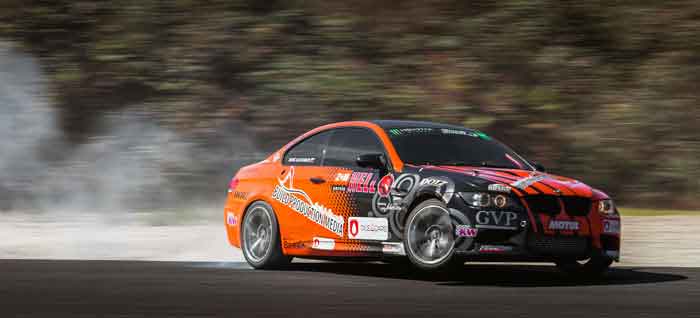
Rear-Wheel Drive Cars in 2026: Engineering Lessons for Capital, Risk and Innovation
Rear-wheel drive may seem like an artefact from an earlier, more mechanical era of the automobile, yet in 2026 it remains a powerful lens through which to understand how enduring engineering principles intersect with contemporary themes such as artificial intelligence, financial markets, sustainability, employment and global capital flows. For the audience of digipdemo.com, which engages daily with questions at the intersection of AI, finance, business, crypto, economics and technology, the story of rear-wheel drive is less about nostalgia for classic cars and more about how design trade-offs, risk management, cost structures and user experience continue to shape strategic decisions in mobility and adjacent industries. By examining why rear-wheel drive still matters in a world of electric powertrains, software-defined vehicles and algorithmic trading, decision-makers can draw practical analogies for investment, product development and policy across the United States, Europe, Asia and other key regions.
The Engineering Core: Robust Architecture and Service-Centric Design
Traditional rear-wheel drive vehicles are built around a longitudinal powertrain layout, where the engine is mounted front-to-back, a driveshaft runs along the length of the chassis, and a differential at the rear distributes power to the driven wheels. This architecture, especially when paired with a solid rear axle, has historically been valued for its robustness, mechanical simplicity and ease of service, characteristics that remain relevant even as vehicles become more software-intensive and connected.
In commercial fleets across North America, Europe, Asia and emerging markets, this robustness still translates into lower unplanned downtime and more predictable maintenance profiles. The separation of steering components at the front and power delivery components at the rear reduces the concentration of critical systems in a single area, meaning that impacts with curbs, potholes or loading ramps are less likely to disable both steering and propulsion simultaneously. For logistics operators, ride-hailing platforms, municipal services and construction fleets, this architecture reduces operational risk and simplifies asset management, especially when combined with telematics and predictive maintenance.
As AI-driven fleet optimization becomes standard, the mechanical predictability of rear-wheel drive integrates well with data models that forecast wear, schedule service and allocate vehicles dynamically. Platforms and tools profiled on digipdemo.com often highlight how combining rugged physical systems with sophisticated analytics can extend asset life, reduce capital expenditure and improve return on investment, illustrating that even in an era of cloud-native software and crypto-based financing, foundational engineering choices remain central to business performance.
Balance, Handling and the Physics of Competitive Advantage
Rear-wheel drive has long been associated with superior handling and performance, particularly in sports cars, luxury sedans and high-performance commercial vehicles. By placing the driven axle at the rear and often distributing mass more evenly along the chassis, engineers achieve a more balanced weight distribution compared with many front-wheel drive layouts that concentrate engine, transmission and driven wheels at the front. This balance is not merely a matter of driving pleasure; it has direct implications for stability, safety and competitive positioning in the market.
When a vehicle accelerates, weight naturally transfers rearward, increasing the load on the back wheels. In a rear-wheel drive car, this effect enhances traction exactly where it is needed most, allowing for more effective acceleration and improved control under high torque. This dynamic is one reason why professional motorsport categories, from touring series in Europe to single-seater championships in Asia and the Americas, continue to rely on rear-wheel drive or rear-biased all-wheel drive layouts, even as hybrid and fully electric powertrains become more prevalent. Performance remains anchored in the physics of weight transfer and traction, regardless of whether the energy source is fossil fuel, hydrogen or electricity.
For investors, founders and analysts tracking the global mobility sector, this persistence of physical constraints provides a useful reminder that not all competitive advantages can be abstracted into software or financial engineering. Electric vehicles with skateboard platforms and dual- or tri-motor configurations have expanded the design space, yet the fundamental relationship between mass distribution, traction and torque delivery still shapes product strategy in the United States, Germany, China, Japan and beyond. Readers who want to connect these engineering fundamentals to broader strategic questions in sustainable business and innovation can explore related analysis and commentary through the curated resources and insights available via the digipdemo.com links page, where complex technical topics are consistently translated into investor-relevant perspectives.
RWD vs FWD vs AWD: Performance Trade-offs
Cornering Dynamics, Torque Steer and System Design Analogies
One of the defining characteristics of rear-wheel drive is the clear separation of functional roles between the front and rear axles. The rear wheels are dedicated to propulsion, while the front wheels are responsible primarily for steering. This division allows the front tires to concentrate their available grip on directional control, rather than sharing it between steering and power delivery, and as a result, rear-wheel drive vehicles typically offer more predictable and precise handling at the limit.
In contrast, front-wheel drive layouts must manage both steering and propulsion at the front axle, which can lead to torque steer when powerful engines or high-torque electric motors are used. Under heavy acceleration, asymmetries in traction or drivetrain geometry can cause the steering wheel to pull to one side, undermining driver confidence and limiting the practical performance envelope. Rear-wheel drive mitigates this risk by decoupling propulsion from steering, enabling drivers to use throttle inputs to adjust the car's attitude mid-corner, rotating the rear of the vehicle while the front tires remain focused on pointing the vehicle where it needs to go.
For a business and technology audience, this separation of roles offers a compelling analogy to distributed systems design in software, decentralized finance in crypto and modular architectures in AI infrastructure. Just as rear-wheel drive improves control and resilience by assigning distinct responsibilities to different subsystems, well-architected digital platforms distribute computation, storage, governance and risk across multiple nodes or services. This principle of modularity and clear role allocation underlies many of the AI, blockchain and cloud-native solutions discussed on digipdemo.com, reinforcing the idea that lessons from physical engineering can inform the design of digital systems and financial instruments across global markets.
Braking, Ride Quality and Perceived Value in Premium Segments
The balanced weight distribution of many rear-wheel drive vehicles benefits not only acceleration and cornering, but also braking performance and overall ride quality. With mass more evenly spread between front and rear, braking forces can be applied more consistently across all four wheels, reducing the tendency for the front brakes to shoulder a disproportionate share of the load. This can lead to shorter stopping distances, improved stability under emergency braking and more predictable behavior when electronic stability control or advanced driver assistance systems intervene.
Ride quality is likewise influenced by this balance. Rear-wheel drive platforms often feel more composed and "planted," particularly at highway speeds or during rapid lane changes, characteristics that are highly valued in premium markets such as Germany, the United Kingdom, the United States and increasingly in China. These qualities contribute to a perception of refinement and control that supports premium pricing and strengthens brand positioning. In an era when many vehicles share common electric platforms and software stacks, the subtle yet tangible difference in driving feel provided by rear-wheel drive can serve as a differentiator for brands seeking to maintain or grow market share in competitive luxury and performance segments.
For asset managers, corporate strategists and founders evaluating mobility-related investments, understanding how such engineering nuances translate into perceived value, residuals and pricing power is essential. The editorial mission described on the digipdemo.com about page emphasizes precisely this kind of integrated analysis, where technical literacy is combined with financial and strategic insight to help decision-makers interpret how product attributes influence margins, brand equity and long-term competitiveness in markets from Europe to Asia-Pacific.
Traction, Risk and the Management of Performance Limits
Rear-wheel drive's strengths in performance and handling are counterbalanced by certain limitations, particularly in low-traction environments. On wet, icy or snowy roads, rear-wheel drive vehicles can be more challenging to control, especially for inexperienced drivers. Because static weight over the driven wheels is often lower than in front-wheel drive designs, initial traction can be compromised when surfaces are slippery, making it easier for the rear tires to break loose under acceleration.
When grip is lost at the rear, the vehicle tends toward oversteer, where the back of the car swings outward relative to the direction of travel. Skilled drivers and motorsport professionals can exploit this behavior to rotate the car quickly through tight corners or to perform controlled drifts, but for everyday road users in regions such as Scandinavia, Canada, the northern United States or certain parts of East Asia, this characteristic can represent a safety risk if not mitigated by electronic stability systems, winter tires and driver education. As a result, many mass-market manufacturers have favored front-wheel drive or all-wheel drive for mainstream passenger vehicles, especially in climates with frequent snow and ice, aligning product strategy with regulatory expectations and consumer preferences for safety and predictability.
From the standpoint of finance and risk management, this trade-off mirrors the dynamics seen in high-yield investments, leveraged strategies or volatile crypto assets. Configurations that offer higher performance potential often come with increased downside risk if not paired with appropriate controls, governance and user sophistication. Regulators, institutional investors and corporate boards evaluating exposure to emerging mobility technologies, from autonomous ride-hailing to tokenized vehicle financing, can draw useful parallels between drivetrain risk profiles and portfolio construction. The analytical frameworks highlighted in the digipdemo.com features section frequently emphasize this balance between upside potential and the need for robust risk mitigation, whether the underlying asset is a vehicle platform, an AI model or a digital token.
Cost Structures, Manufacturing Complexity and Strategic Positioning
Rear-wheel drive platforms are generally more complex and costly to engineer and manufacture than front-wheel drive architectures. The need for a longitudinal engine or motor arrangement, a dedicated driveshaft, a rear differential and reinforced underbody structures adds both material and assembly costs. Packaging is less space-efficient, particularly in compact vehicles, and the additional components can increase weight, which in turn may affect fuel consumption or battery range. For high-volume, cost-sensitive segments in Europe, Asia, Africa and South America, front-wheel drive has therefore become the default, allowing manufacturers to optimize interior space, reduce production costs and
